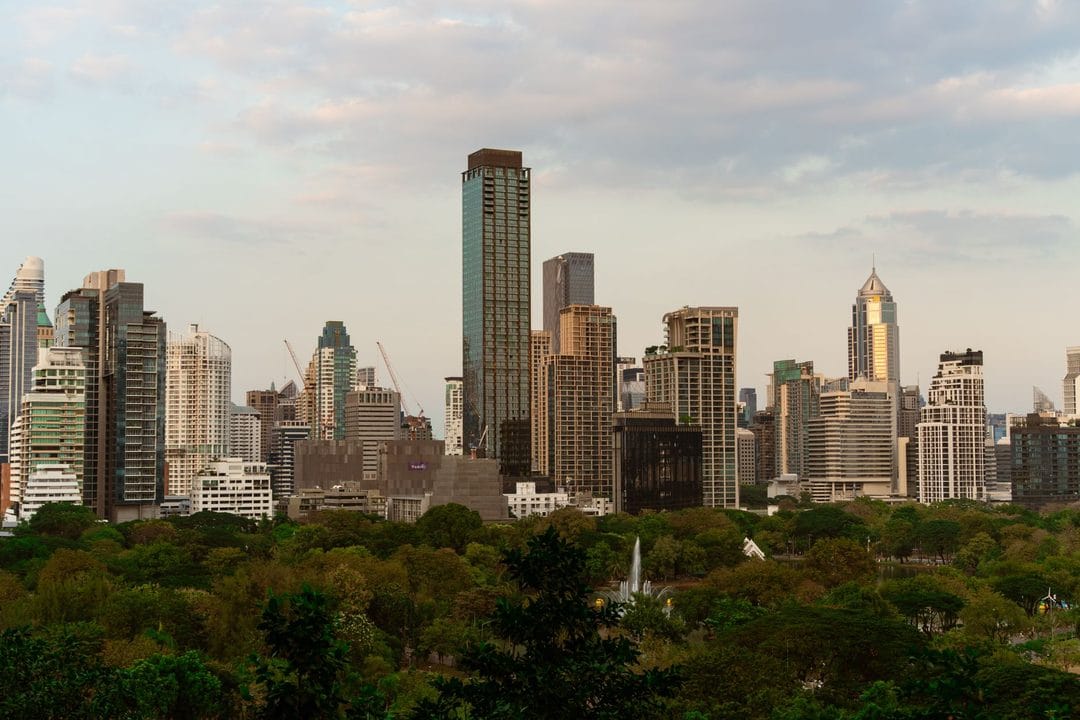
Finance ministers, central bankers and development lenders gathered in Bangkok from 12 to 18 October 2026 for the annual meetings of the International Monetary Fund and the World Bank Group. The event opened under the Bank of Thailand Governor, Vitai Ratanakorn, and it arrived at a moment when Asia's growth story is split in two. Electronics and AI hardware exports are running hot in parts of the region, while the wider economy struggles with weak productivity and thin job creation. Most Asian sessions in Bangkok returned to that gap, and the discussion went well beyond the usual forecast talk.
The IMF's regional picture in Bangkok
The timing of the meetings matters for the numbers on the table. The IMF's World Economic Outlook, released on 13 October, put global growth at 3.1 per cent for 2026 and 3.4 per cent for 2027. Global headline inflation is projected at 4.7 per cent in 2026, up from 4.1 per cent in 2025. The Fund also reported that only 32 economies now account for 95 per cent of global growth, down from 54 in the April outlook. That narrowing is one reason Asian officials focused on domestic sources of growth rather than external demand, because a small group of economies carrying the global total leaves little room for slower partners to catch up.
According to the live coverage published by the Atlantic Council, the Asia-specific arguments were less about the headline forecast and more about the structure of growth. Martin Mühleisen wrote on 15 October that South Korea and the ASEAN economies were benefiting from the AI investment boom and from trade that had been diverted away from US-China flows. He added that the gains were not evenly spread. In South Korea, the chip-related gains were concentrated in a small number of companies, and part of the boost reflected US restrictions on China's access to advanced chip equipment rather than broad-based strength in the economy.
Productivity, not exports, dominated the Thailand session
On 14 October, a panel on Thailand brought together Santitarn Sathirathai, the Thai vice minister of finance, Stephen Ndegwa, the World Bank division director for Thailand and Myanmar, and Arnaud Dupoizat, the IFC regional director for East Asia. All three named raising productivity and domestic value added as the top priority for the country. The stated target is high-income status by 2037, which requires a shift away from assembly work toward activities that keep more value inside the national economy.
The argument behind that target is simple to state and hard to deliver. The share of domestic value added in the ASEAN-5 economies, which are Indonesia, Malaysia, the Philippines, Thailand and Singapore, has been shrinking, according to the analysis cited in the coverage. Productivity has roughly stalled, and high-paying jobs remain scarce outside a few sectors. Foreign direct investment can add export volume without adding much domestic capability if the supplier base stays thin, and the panel framed that as the central problem for the coming decade.
Chatib Basri, the former Indonesian finance minister, pushed the point in a different direction. He called for domestic industry to collaborate across geopolitical camps, rather than choosing one supply chain and locking into it. In his view, firms that depend entirely on one set of trading partners will find their options narrowing as tariffs and export controls change. He did not name specific companies or sectors in the coverage available for this report.
The won, capital flows and the Korean question
Changyong Rhee, a former Bank of Korea governor, made the currency point at an Atlantic Council discussion held during the meetings. He said rapid equity inflows and portfolio rebalancing had put downward pressure on the won, even as South Korea's current-account surplus grew. The combination is unusual. A growing surplus would normally support the currency, but a surge of foreign money buying equities can push the other way, and the won has been volatile through the AI-driven rally.
That tension also shaped the capital-controls debate. A session on Friday, 16 October, titled "Managing Financial Openness in the Global South," brought civil society leaders into the discussion. The participants cited research covering more than fifty countries over twenty years, arguing that capital controls can help preserve monetary autonomy during periods of heavy inflows. Helene Rey's work on global financial cycles was cited in support. The panel did not reach a shared position on whether Asian governments should adopt such controls, and the discussion was left open.
Pakistan's Finance Minister, Muhammad Aurangzeb, and Indian Finance Minister Nirmala Sitharaman were also on the programme. The coverage available for this report does not include substantive remarks from either session, so no positions are attributed to them here.
Fraud risk and the Bangkok Blueprint
The meetings also produced a practical document. The Bangkok Blueprint was developed by the IMF, the World Bank and the Bank of Thailand as a playbook for handling fraud risks to households, businesses and digital financial services. The text focuses on the operational side of the problem: how supervisors, banks and payment providers should detect and respond to scams that move money through mobile and digital channels. Fraud has grown alongside digital payments across Southeast Asia, and officials have increasingly treated it as a financial stability question rather than only a consumer complaint.
Digital integration was the other concrete thread. Sutapa Amornvivat, a Thai leader in digital integration, said the ASEAN Digital Economy Framework Agreement could be catalytic for the region when it is signed in November. The agreement is intended to make cross-border digital trade and payments easier across member states. Its eventual impact depends on how quickly member governments implement the commitments, and the coverage did not include the final text or the list of signatories.
Defining the terms behind the debate
Two phrases recur throughout the Bangkok coverage, and both carry more weight than their plain wording suggests. Domestic value added is the portion of an export's worth that stays inside the exporting economy, measured after the cost of imported components is removed. A phone assembled in a free-trade zone may leave the country as a high-value product while contributing only a fraction of its price to local wages and suppliers. When the share of domestic value added falls, a country can record strong export growth while its households see little of the gain. That is the pattern the panel described for the ASEAN-5 group. The concept matters for reading export statistics, because gross export values include imported parts that never add to local income. This is why the Thailand panel named domestic value added as a priority alongside productivity.
The high-income target is also more specific than it sounds. Official high-income status is set by the World Bank using gross national income per person, and the threshold is updated every year. Reaching it by 2037 would require sustained productivity growth well above the recent trend, not just faster export volumes. Officials in the session did not give a numerical productivity target in the coverage reviewed, so the 2037 date is the only fixed marker in the public record of the discussion. A threshold of this kind moves over time, so a country has to grow faster than the benchmark itself to close the distance. The gap between current income and the threshold is therefore the measure that matters, not the target year alone.
Global financial cycles are the third term. Research cited in the capital-controls session describes how capital flows into emerging markets tend to rise and fall together, driven largely by conditions in the major financial centres rather than by local fundamentals. If that correlation holds, a country can face sudden inflows that push its currency up and then sudden outflows that push it down, regardless of its own policy settings. The won's recent volatility, which Changyong Rhee linked to equity inflows, fits that description, though the coverage did not include a formal decomposition of the won's moves.
Officials also used the term AI investment boom in a narrower sense than the phrase suggests. In the Korean case, the coverage described gains concentrated in a few chip producers rather than a broad expansion of hiring. A boom that lifts exports and equity prices can coexist with weak employment growth across the wider economy, and the panellists treated that gap as part of the productivity question rather than a separate issue.
What the meetings did not settle
The Bangkok meetings produced a clear diagnosis more than a set of decisions. Officials agreed that productivity, domestic value added and financial safeguards need more attention, and they acknowledged that the AI boom is lifting some economies faster than others. They did not announce new lending commitments in the material reviewed for this report, and no new forecasts for individual Asian economies were published beyond the regional figures in the World Economic Outlook.
Several items remain open for the coming weeks. The ASEAN Digital Economy Framework Agreement is scheduled for signature in November. The ASEAN ministerial calendar lists further meetings in late October, including the 47th ASEAN Ministers on Agriculture and Forestry and the 20th ASEAN Defence Ministers' Meeting-Plus. The Bank of Thailand and the IMF have not published a full readout of the Blueprint's implementation timeline. Whether the productivity agenda turns into policy will show up first in budget documents and in investment approvals across the region.
For readers following the region, the practical test is the next round of official data. Quarterly national accounts, trade statistics on domestic value added, and the Bank of Thailand's own reports on digital payment fraud will show whether the concerns raised in Bangkok are reaching the numbers. Those releases, rather than the meeting statements, will indicate whether the productivity agenda is moving from diagnosis to implementation.