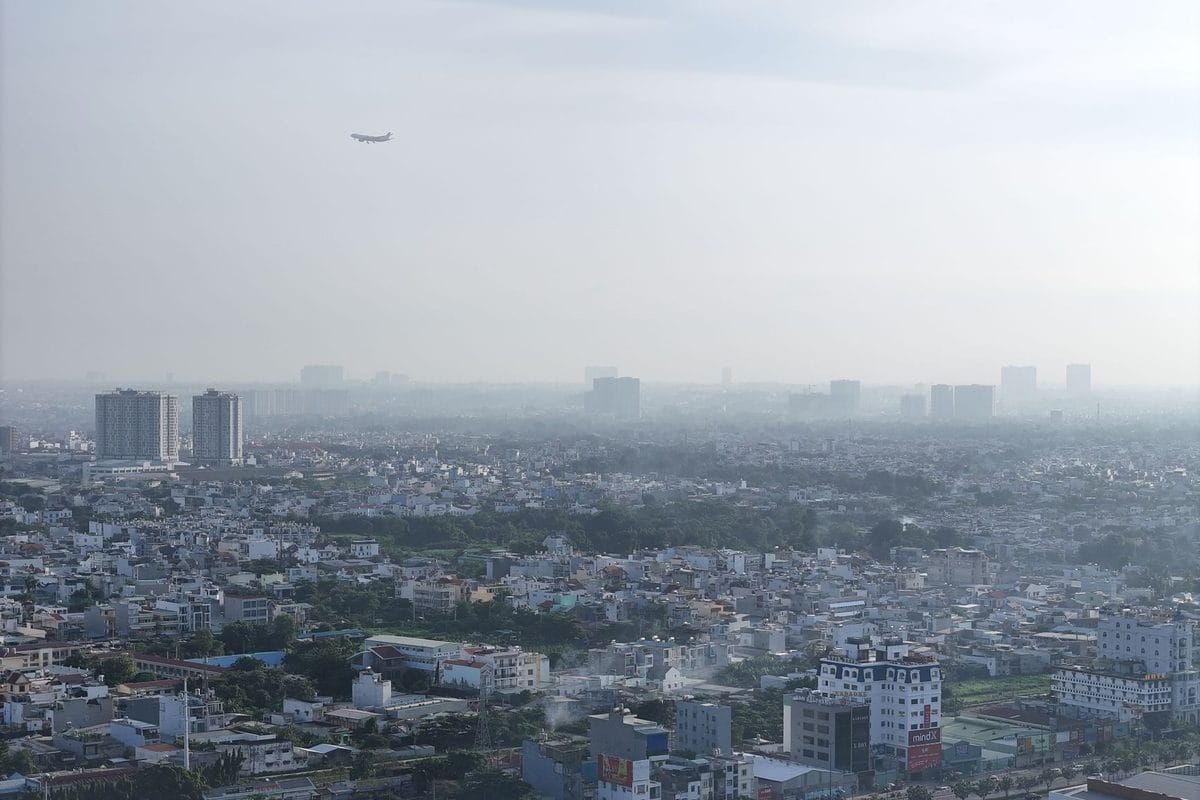
Smoke from forest and peatland fires in Indonesia has settled again over much of Southeast Asia. In the second week of October, Malaysia closed schools in its capital and several states, the low-cost carrier Firefly suspended flights between Kuala Lumpur and Singapore, and Singapore reintroduced subsidised care for haze-related illnesses, a measure it last used in 2015.
Schools close across Malaysia
Malaysia ordered schools closed on Friday, 9 October, across Kuala Lumpur, the administrative capital Putrajaya, and the states of Johor, Malacca, Negeri Sembilan, Pahang and Selangor, Al Jazeera reported. The order affected roughly two million students, while Kuala Lumpur recorded an Air Pollutant Index (API) reading of about 170.
Malaysia's own guidelines classify API readings as follows:
| API reading | Malaysian classification |
|---|---|
| Above 100 | Unhealthy |
| Above 200 | Very unhealthy |
| Above 300 | Hazardous |
| Above 500 | Threshold for declaring a local emergency |
King Sultan Ibrahim declared that schools should close when API readings reach 150 or higher, according to Al Jazeera. Education Minister Fadhlina Sidek promised parents more advance notice of future closures.
Prime Minister Anwar Ibrahim said that "the haze issue is indeed at a worrying level". He said he had spoken to Indonesian President Prabowo Subianto, who agreed to take "the necessary steps", but gave no details. Anwar also asked the foreign minister to press for an urgent meeting of ASEAN environment ministers, and Kuala Lumpur has stepped up cloud seeding to trigger rain.
By Tuesday, 13 October, schools had reopened in most Malaysian states as air quality improved slightly. They remain closed in three states, one federal territory and several districts, Al Jazeera reported.
Flights and air quality in Singapore
Firefly, a subsidiary of Malaysia Aviation Group, first announced the cancellations on 10 October, citing low visibility. On 13 October it extended the suspension of flights between Sultan Abdul Aziz Shah Airport near Kuala Lumpur and Seletar Airport in Singapore through Wednesday, 14 October, describing the step as a "proactive safety measure". Affected passengers are being rebooked on Malaysia Airlines flights to Changi Airport, subject to seat availability.
IQAir, the Swiss air quality monitoring company, ranked Singapore and Kuala Lumpur as the world's two most polluted cities. Its readings for 13 October were 199 for Singapore and 183 for Kuala Lumpur. Al Jazeera notes that readings above 150 are generally considered unhealthy.
Fires, health costs and El Niño
The fires burn mostly on the Indonesian islands of Sumatra and Borneo. Al Jazeera describes them as Indonesia's most intense in 11 years. El Niño, a weather pattern expected to be among the strongest in four decades, has left the land drier than usual. Fires have burned across six Indonesian provinces, with at least 200,000 hectares scorched, Al Jazeera reported on 9 October.
Indonesia's Ministry of Health has recorded more than 170,000 respiratory infections. Al Jazeera notes that the figure is probably higher, because it counts only people who sought medical care. In August, Indonesia's coordinating minister for political and security affairs had already warned that El Niño conditions threatened more fires during the dry season.
Indonesian authorities warned in September that the fires could continue through October or early November, because the rainy season is forecast to arrive late. An IQAir alert from early September also flagged a below-normal rainfall forecast for the southern part of the region through October.
A lawsuit in Pontianak
On 8 October, The Guardian reported that a class action had been filed in West Kalimantan against the Indonesian government for "gross negligence" in handling the fires. The plaintiffs include Indigenous and civil society groups, among them a chapter of the Indigenous NGO AMAN and the local branch of Catholic Youth. The suit names President Prabowo Subianto and the governor of West Kalimantan among 10 defendants and asks for recovery measures that would cover residents' healthcare costs.
None of the named defendants attended the opening day of the hearing in Pontianak on Wednesday, 7 October, and the judges adjourned it until 21 October. The plaintiffs' lawyer, Glorio Sanen, said the case was "a step to address the problem" of annual fires. A similar lawsuit filed last year in a South Sumatra court was dismissed. Plaintiff Yakobus Kumis, who represents a Dayak community, called for the smoke crisis to be classified as a national disaster. The presidential office did not immediately respond to a request for comment, the Guardian reported.
Indonesia's government has vowed a crackdown and deployed the military to fight the fires. Malaysia's Foreign Minister Mohamad Hasan said Indonesia had sent about 60,000 personnel to the effort. He added that thick smoke had grounded 34 aircraft, including planes and helicopters, and that remote terrain and limited water supplies were slowing the work.
The test for ASEAN
Mohamad Hasan said he would press for stronger regional mechanisms at the next ASEAN foreign ministers' meeting. "We already have an ASEAN mechanism for natural disasters, but haze is not included or classified as a natural disaster," he told reporters in Sepang, according to Bernama, Malaysia's state news agency. The Philippines, which chairs ASEAN this year, has put the issue on the agenda. Dominic Xavier Imperial, a spokesman for the Philippine Department of Foreign Affairs, said of the November meeting: "It's in the agenda." The meeting precedes the 49th ASEAN summit in Manila.
A DW analysis compares the current crisis with the 2015 fires, which it cites as having cost $16 billion. The analysis calls for ASEAN cooperation, for sustainable land clearing, and for the bloc to put its emergency response mechanisms into practice.
What to watch in the coming weeks
- 21 October: the adjourned hearing of the West Kalimantan class action in Pontianak.
- Wednesday, 14 October: the current end date of Firefly's Kuala Lumpur–Singapore suspension.
- November: the ASEAN foreign ministers' meeting in the Philippines, where haze is on the agenda.
- October to early November: the period in which Indonesian authorities expect the fires to continue, depending on when the rains arrive.
School closures, grounded flights and a court case are now running at the same time. The next formal step is the November meeting of ASEAN foreign ministers, where Malaysia wants haze considered under the regional mechanisms rather than only as a national emergency.