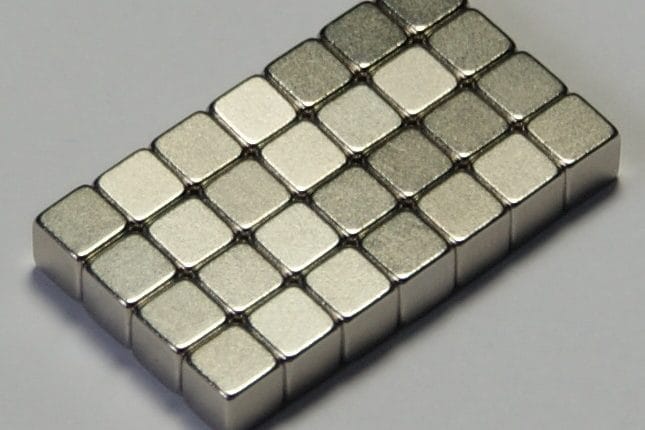
China has spent the first half of 2026 tightening the licensing regime that governs exports of rare earth elements and the permanent magnets made from them, and the effects are now visible across Asia's electronics, electric-vehicle and defence-adjacent manufacturing base. Governments in Japan, South Korea, India and several Southeast Asian economies have spent recent weeks briefing industry associations on contingency planning, while procurement officers at magnet-dependent factories describe longer approval cycles and thinner inventories than at any point since the last major supply disruption.
The licensing system itself is not new — Beijing has controlled rare earth exports through a permit process for over a decade — but the scope of goods requiring case-by-case sign-off has widened, and processing times have stretched from weeks into months for some categories of magnet and alloy. Because China accounts for the large majority of global rare earth refining capacity, even a modest slowdown in approvals ripples quickly through supply chains that have little redundancy built in.
How the licensing system works
Rare earth exports from China pass through a dual-control structure: mining and separation quotas set overall production, while a separate export-licensing desk reviews individual shipments, particularly those involving heavy rare earths and finished magnets with potential dual-use applications. Officials have periodically expanded the list of magnet grades and downstream products that require an end-user declaration, a step that adds administrative time even when a shipment is ultimately approved.
Analysts tracking the sector note that the tightening has coincided with broader efforts by Beijing to formalise traceability across the rare earth value chain, from mine to finished component. Whatever the underlying rationale, the practical effect for buyers abroad is the same: paperwork that once cleared in days now routinely takes weeks, and some shipments are held for additional review with no fixed timeline for release.
Where the pressure is landing
Japan and South Korea, both home to large consumer electronics and automotive supply chains, have been among the first to flag the issue publicly. Magnet-grade neodymium and dysprosium feed directly into voice coil motors, hard-disk components and the traction motors used in hybrid and electric vehicles, leaving manufacturers with limited ability to substitute inputs on short notice.
Southeast Asia's fast-growing electric-vehicle assembly hubs face a related but distinct problem. Countries that have spent the past several years courting battery and motor assembly investment now find that a meaningful share of the magnet content in locally assembled vehicles still originates from Chinese refiners, even where final assembly happens elsewhere in the region. That dependency undercuts the diversification narrative that underpinned much of the "China+1" investment wave, since shifting a factory's address does not by itself shift where the magnets are made.
India, which has pushed to build out both a domestic electronics manufacturing base and defence-related production, is watching the licensing changes with particular attention. Rare earth magnets are a component in a range of precision motors and sensor systems used in both civilian and defence applications, and New Delhi has signalled interest in accelerating its own rare earth processing capacity as a hedge against future supply interruptions.
A quiet effect on costs
Beyond the logistics of getting shipments approved, the licensing slowdown has put upward pressure on magnet prices across the region, as buyers compete for the more limited volume that clears customs on predictable timelines. That cost increase has so far been absorbed mostly by manufacturers rather than passed on to consumers, according to industry participants, since electronics and automotive pricing tends to be set well in advance and companies are reluctant to signal supply-chain strain through visible price changes. Whether that absorption continues depends largely on how long the current licensing pace persists.
Currency effects compound the picture in some markets. A weaker local currency against the US dollar makes an already more expensive input costlier still in local-currency terms, adding another variable that regional finance departments are factoring into their 2026 cost projections alongside the licensing delays themselves.
Manufacturers are buying time, not solving the problem
Facing longer and less predictable lead times, companies across the region have adopted a familiar playbook: building larger safety stocks of finished magnets, qualifying second sources where they exist, and in some cases redesigning products to use less rare earth content per unit. None of these measures resolve the underlying concentration of refining capacity, but they buy manufacturers months rather than weeks of runway when a shipment is delayed.
Recycling has drawn renewed interest as a partial offset. Several electronics and automotive firms in Japan and South Korea have expanded pilot programmes to recover rare earth content from end-of-life motors and hard drives, though industry participants are candid that recycled volumes remain a small fraction of what refined imports supply. Scaling recycling to a meaningful share of demand would require years of infrastructure investment and a far larger base of end-of-life products to draw from than currently exists.
Why diversification is slower than the politics suggest
Governments across the region have talked for several years about reducing reliance on a single source for critical minerals, and new mining and separation projects have been announced from Australia to Vietnam to the United States. The gap between announcement and output, however, remains wide. Rare earth separation is technically demanding and environmentally sensitive, and permitting, financing and construction for a new facility typically take the better part of a decade before it reaches meaningful production volumes.
In the meantime, the refining bottleneck matters as much as the mining one. Several projects outside China extract rare earth ore but still ship it to Chinese facilities for separation and processing, because that is where the bulk of the world's specialised refining capacity sits. Building an alternative refining base, rather than simply diversifying where ore comes out of the ground, is the more difficult and more consequential part of the diversification effort — and it is the part still furthest from completion.
The regional response so far
Industry groups in Japan and South Korea have pressed their governments to prioritise the issue in upcoming trade discussions with Beijing, arguing that predictability in licensing timelines matters as much as the volume of material eventually approved. Some Southeast Asian trade officials have raised the topic in the context of broader regional economic cooperation, framing critical-mineral resilience as a shared concern rather than a bilateral one between any single country and China.
- Japanese and South Korean electronics and automotive firms are expanding safety-stock policies for magnet-grade rare earth inputs.
- Southeast Asian EV assembly hubs are reassessing how much of their supply chain resilience claims depend on magnet sourcing rather than final assembly location.
- India is weighing faster timelines for domestic rare earth processing investment.
- Recycling programmes are expanding, but from a small base relative to total regional demand.
- New mining and separation capacity outside China remains years from meaningful scale, with refining capacity the harder constraint to solve.
What to watch next
The near-term signal to track is whether licence processing times stabilise or continue to lengthen through the rest of the year, since that pace — more than any single policy announcement — is what factory planners are basing their inventory and sourcing decisions on. A second signal is whether any Asian economy announces a concrete timeline for new separation capacity, as opposed to exploration or mining agreements alone, since separation is the step the region has been slowest to build outside of China.
For now, the region's electronics, EV and defence-adjacent manufacturers are managing the licensing squeeze the way they have managed earlier supply shocks: through inventory buffers, incremental substitution and a diversification strategy that remains, by most manufacturers' own admission, a multi-year project rather than a near-term fix.