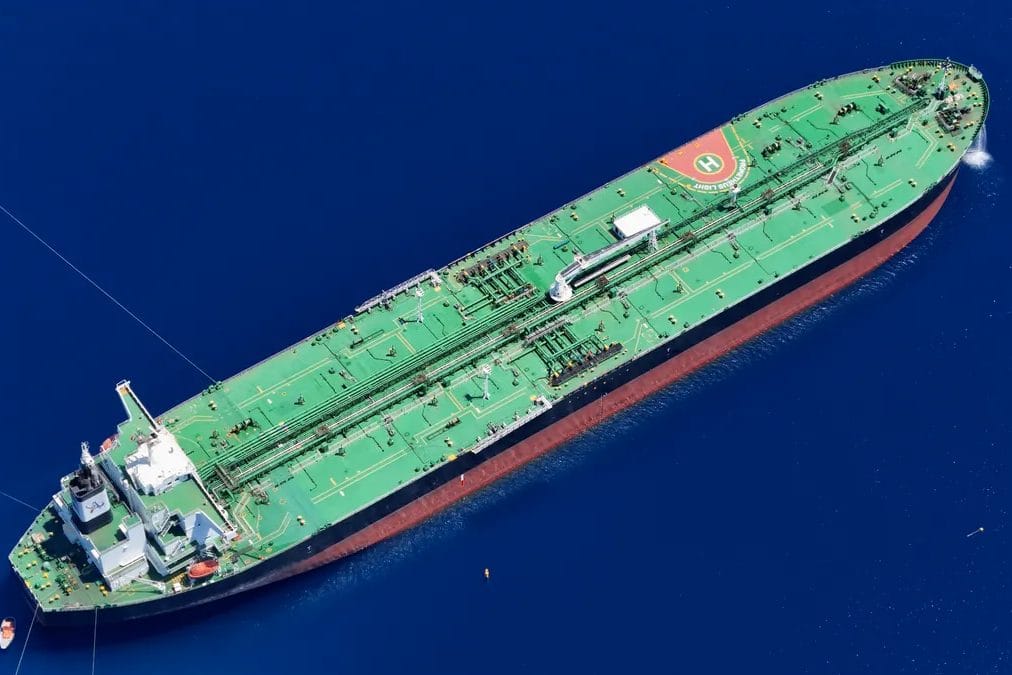
China's refiners bought an estimated 1.25 million barrels per day of seaborne Russian crude in August, down only slightly from July's 1.423 million bpd, according to commodity analytics firm Kpler. The renewed appetite is pulling barrels away from India just as New Delhi's own Russian imports slide, tightening a supply chain that has spent five months absorbing the fallout from the closure of the Strait of Hormuz.
China Fills the Gap Left by Iran
The mechanism is straightforward. Since Israeli and US strikes on Iran on 28 February triggered Tehran's missile and drone campaign against shipping in the Strait of Hormuz, China's imports of Iranian crude have collapsed from 1.14 million bpd in March to roughly 340,000 bpd in August — barely a third of the pre-war level and in line with July's 329,000 bpd and June's 361,000 bpd. Hormuz normally carries about a fifth of the world's crude oil and refined products; flows have partly recovered in recent weeks but remain well below where they stood before the conflict.
Chinese refiners have plugged that gap with Russian barrels instead. Beijing typically draws the bulk of its seaborne Russian oil from the country's eastern ports, which ship ESPO grade — 90% of China's Russian seaborne imports came from Asian ports in July and 78% in June. In August, though, the share sourced from Russia's European ports, which mainly export Urals crude, jumped to 31%. That shift matters well beyond China's own balance sheet, because Urals from Europe's Baltic and Black Sea terminals is the same crude India has relied on to replace lost Middle Eastern supply.
India's Russian Barrels Start to Thin Out
India's total imports of Russian crude fell to 1.87 million bpd in August, down from a record 2.79 million bpd in July and 2.73 million bpd in June — both months well above the 1.21 million bpd average India was importing from Russia in the three months before the war began. The European-port share of India's Russian imports actually rose, to 97.4% of the total in August from 93.4% in July, as China absorbed more of Russia's Asian-origin crude. But the volume still dropped by close to 770,000 bpd, or nearly 30%, because China is now competing for the same European cargoes.
The knock-on effect shows up in India's overall crude intake, estimated by Kpler at 4.17 million bpd for August — the lowest since the Iran war began and down sharply from 5.06 million bpd in July. Kpler expects the August figure to be revised upward as more cargoes are assessed before month-end, but the direction is unmistakable: India's refiners are struggling to find enough crude to fully replace the Russian barrels now heading to China instead.
That has not yet dented India's fuel exports. Shipments of light and middle distillates — diesel and gasoline — held at about 1.29 million bpd in August, matching July and marking the two strongest months since last September. Any shortfall from tighter crude supply typically shows up with a lag, so the real test for India's refiners, and for the wider Asian products market that depends on their diesel and gasoline cargoes, comes in September.
Where New Delhi Is Turning Instead
Russia's share of India's total oil imports has eased from over 50% in June and July to about 43% in August, according to Kpler data cited by CNBC. Filling the gap is a mix of sources that barely registered six months ago. India's Venezuelan crude imports have risen from zero in March to 383,000 bpd by August; combined with US crude purchases, the two sources now account for roughly 11% of India's total crude imports.
Kpler's lead research analyst, Sumit Ritolia, told CNBC the substitution has technical limits as much as political ones: Indian refineries configured for medium and heavier grades cannot simply swap in the relatively light crude the US typically exports, which is why the heavier Venezuelan barrels have become the more useful substitute. Washington has also become India's dominant LPG supplier, providing over 70% of India's LPG imports in July and close to a third of its LNG — gains US officials in New Delhi have pointed to as evidence of a broader energy realignment, even as India insists its purchasing decisions are driven by energy security rather than diplomacy.
A Tariff Bill Waiting for September
The backdrop to all of this is a Russia sanctions bill that would authorise tariffs of up to 100% on countries buying Russian energy, due to reach the US House for a final vote in September. India has been here before: a 25% US tariff imposed in August last year, explicitly linked to Russian oil purchases, coincided with a drop of more than 13% in India's Russian imports over the fiscal year ending March 2026, before Washington revoked the tariff in February. Russian President Vladimir Putin, in a meeting this week with India's foreign minister S. Jaishankar, referenced last year's dip before noting that trade between the two countries "has been steadily rising" again in 2026.
Ritolia's assessment is that the new tariff threat is unlikely to force an immediate pullback, given how constrained global supply already is. Replacing Russian barrels, he said, is "technically feasible, but economically and politically fraught" — a description that applies equally to India's refiners trying to keep pace with demand and to the Indian government trying to balance a US trade relationship against continued discounted Russian supply.
The Cost So Far
The price of navigating that balancing act is now quantified. A report from the Centre for Research on Energy and Clean Air estimates India's gross additional fossil-fuel import costs at $22 billion between March and August 2026, with a net additional cost of about $14.4 billion — roughly 0.38% of GDP. China's gross additional cost over the same period was estimated at $35 billion, and the EU's, the largest of any region, at $78 billion. South Korea, competing with India and China for the same constrained non-Russian barrels, faced a net additional crude cost of $9.7 billion over the period — the third-highest of any single country in the CREA analysis, behind only China and India.
For India specifically, the squeeze is compounding: higher per-barrel costs from the Hormuz shock, layered on top of a shrinking pool of the discounted Russian crude that had partly cushioned those costs through the summer. With China now drawing more heavily on the same European-port cargoes, and the sanctions bill still working its way toward a House vote, India's refiners head into September with less room to manoeuvre than they had in July.
What It Means for the Rest of the Region
India's position in this chain matters to buyers well beyond South Asia. Its refiners are, per Reuters' Clyde Russell, a major exporter of diesel and gasoline into Asia's wider fuel market. A crude shortage at those refineries would not stay an Indian problem — it would exacerbate a regional products supply crisis that Reuters describes as already mounting since the Hormuz closure began.
For now, India's distillate exports have held steady through August. Whether they hold through September, once the lagged effect of this month's crude shortfall reaches refinery throughput, is the next data point Reuters flags for the wider Asian products market to watch.