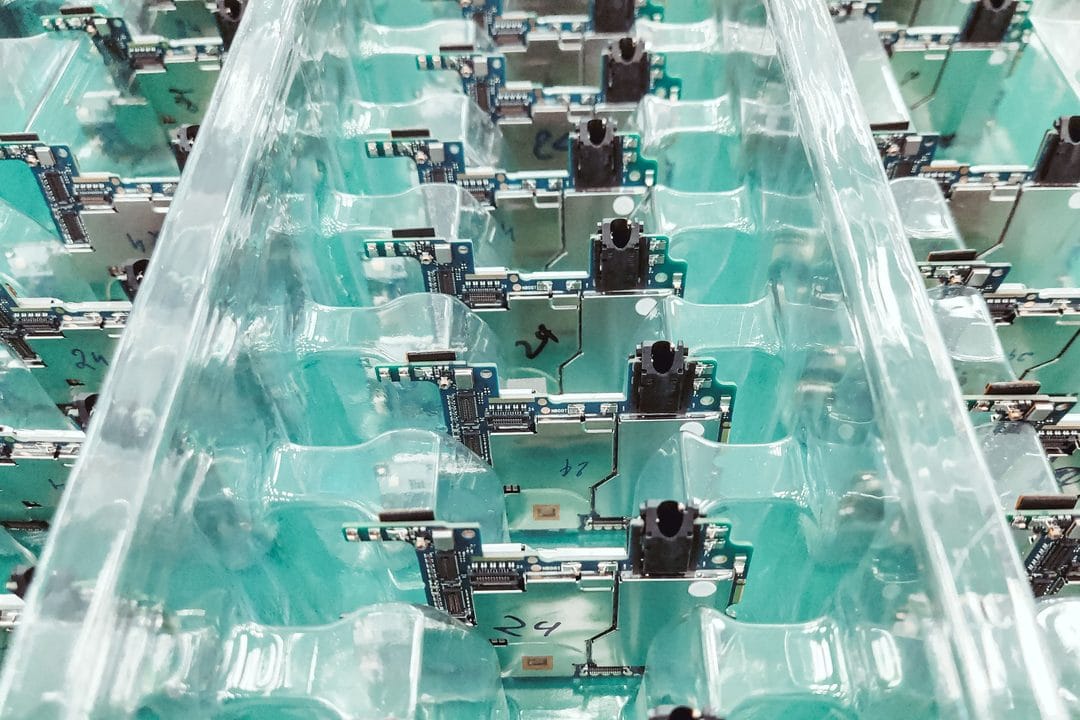
India's semiconductor programme has moved past the announcement stage. Three facilities approved under the India Semiconductor Mission (ISM) — Micron Technology's assembly and test plant, Kaynes Semicon's OSAT unit, and CG Power's CG Semi facility, all in Sanand, Gujarat — are now in commercial production, according to the Press Information Bureau (PIB). A fourth project is expected to come online later in 2026, MeitY Secretary S. Krishnan said at a briefing announcing this year's SEMICON India conference.
Krishnan told reporters that five to six semiconductor projects could be in commercial production by the end of 2026, up from three today. That timeline matters for a government that has spent four years courting fabs and packaging plants without, until recently, having much silicon to show for it.
A second, larger mission phase
The Union Cabinet approved ISM 2.0, branded Semicon 2.0, in mid-July 2026 with a fiscal outlay of Rs 1,27,500 crore — roughly $15.3 billion. The programme is structured around six pillars: chip design, machines and materials, additional fabs, strengthening of assembly-test-mark-and-package (ATMP) and outsourced semiconductor assembly and test (OSAT) capacity, research and development, and talent development, per the government's own summary of the cabinet decision.
Design support has already reached a working scale. Twenty-four chip and system-on-chip design projects from start-ups and small firms have been approved for financial backing, and 105 start-ups and MSMEs have been granted access to industry-standard electronic design automation (EDA) tools, PIB said. Those numbers describe a design bench, not yet a manufacturing base — but they are the layer India has historically been strongest in, through firms doing back-end chip design work for global clients.
Gujarat's cluster, Assam's bet
Gujarat now hosts the largest concentration of ISM-backed projects, with six approved facilities including the Tata Electronics–PSMC fab under construction in Dholera, alongside the Micron, Kaynes and CG Semi sites already producing. By contrast, Assam represents a different kind of bet: the Tata Semiconductor Assembly and Test facility in Jagiroad is the single largest ISM investment on record, at Rs 22,916 crore, and is intended to anchor a semiconductor cluster in India's northeast. First operations there are targeted for 2026–27.
None of this puts India in direct competition with the advanced-node fabs running in Taiwan or South Korea. Instead, the approved projects are concentrated in packaging, testing and mature-node assembly rather than leading-edge logic fabrication — the tier of work Danny Quah, an economist at Singapore's Lee Kuan Yew School of Public Policy, has separately described as the "supporting" rather than "leading-edge" end of the regional chip boom. India's stated goal is narrower: reduce near-total dependence on imported chips for its own electronics and automotive sectors while building a base that can climb toward design and fabrication over time.
The industry converges on Delhi
The next test of that narrative comes on September 17, when Prime Minister Narendra Modi is due to inaugurate SEMICON India 2026 at the Yashobhoomi convention centre in New Delhi. Now in its fifth edition, the event runs through September 19 under the theme "Silicon to Systems: Building the Ecosystem," according to SEMI, the industry association that organises the conference. Organisers expect more than 500 exhibitors and participants from over 40 countries, including six dedicated country pavilions.
Whether the mission can sustain that momentum will depend less on the conference itself than on what happens at sites like Dholera and Jagiroad over the following year — where fabs currently under construction, rather than the ones already shipping, will determine if India's "next phase" claim holds up.