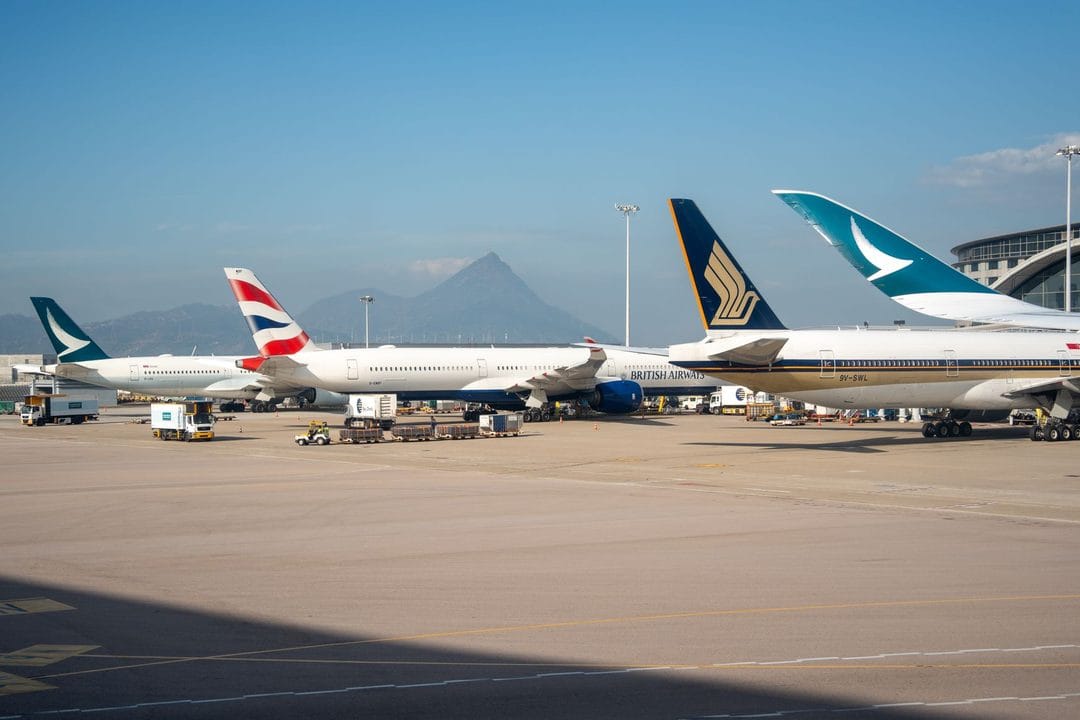
Airlines across the Asia-Pacific are committing to new aircraft at a pace not seen in years, even as the manufacturers building those jets fall further behind on deliveries. The result is a widening gap between what regional carriers have ordered and what they can actually fly, a tension that is shaping how the industry plans for the rest of the decade.
According to schedule data compiled by aviation analysts, carriers in the region are due to operate roughly 588 million departure seats in the second quarter of 2026, up from about 561 million a year earlier. The increase puts the region well above its 2019 baseline, with industry trackers placing Asia-Pacific traffic around 14 percent higher than pre-pandemic levels.
Orders climb as demand returns
The clearest signal of confidence has come from the order book. AirAsia's commitment to 150 Airbus A220 aircraft ranks among the largest single deals announced by a regional carrier in recent memory, and it has been joined by fresh orders and fleet commitments from China Southern Airlines, Xiamen Airlines and Cathay's cargo arm, among others. Malaysia Airlines, meanwhile, has signalled it intends to expand capacity by roughly half over five years on the strength of incoming deliveries.
Southeast Asia sits at the centre of this expansion. Analysts describe the subregion as the fastest-growing segment within an already fast-growing market, driven by rising middle-class travel, the spread of low-cost carriers and a steady recovery in inbound tourism. Carriers there have accumulated some of the largest order backlogs in the industry as they race to secure delivery slots stretching into the 2030s.
Deliveries fall short
What the carriers cannot control is how quickly those aircraft arrive. Supply-chain constraints remain the dominant obstacle, with both major manufacturers wrestling with shortages of engines, structural components and skilled labour. Industry estimates suggest scheduled deliveries across the sector could fall short of plan by around a fifth in 2026, forcing airlines to stretch the working life of older aircraft and, in some cases, delay route launches.
The mismatch has practical consequences. Several full-service carriers in the region are overhauling their fleets at a slower pace than they had intended, and a few are weighing additional orders simply to hold their place in the production queue. Securing a delivery slot has become a strategic objective in its own right, separate from the immediate need for capacity.
Geopolitics reshapes the map
Where those new seats are being deployed is shifting as well. Capacity on routes between China and Japan has contracted sharply amid political friction between the two countries, and airlines have redirected aircraft toward Southeast Asian markets such as Thailand, Malaysia and Vietnam, where demand has held firm. China continues to dominate domestic capacity growth across the region, with its home market scheduled to expand by roughly 7 percent year on year.
Profitability has not kept pace with the traffic figures. Rising fuel costs, longer routings driven by airspace closures and broader geopolitical uncertainty have squeezed margins, pushing carriers toward tighter discipline. The average passenger load factor across the region climbed to nearly 85 percent in the second quarter, an increase of more than a percentage point from a year earlier, as airlines prioritised filling existing aircraft over aggressive growth.
A more measured phase
Compared with the sharp rebound of the previous two years, the current period reads less like recovery and more like consolidation. International passenger traffic was broadly stable through the spring months, suggesting the easy gains from reopening have largely been booked and the industry is settling into a steadier rhythm of expansion.
For now, the order books point in one direction and the delivery schedules in another. Regional carriers are betting that demand will keep rising into the next decade, and they are placing those bets years in advance. Whether the manufacturers can close the gap will determine how much of that planned growth actually leaves the ground.