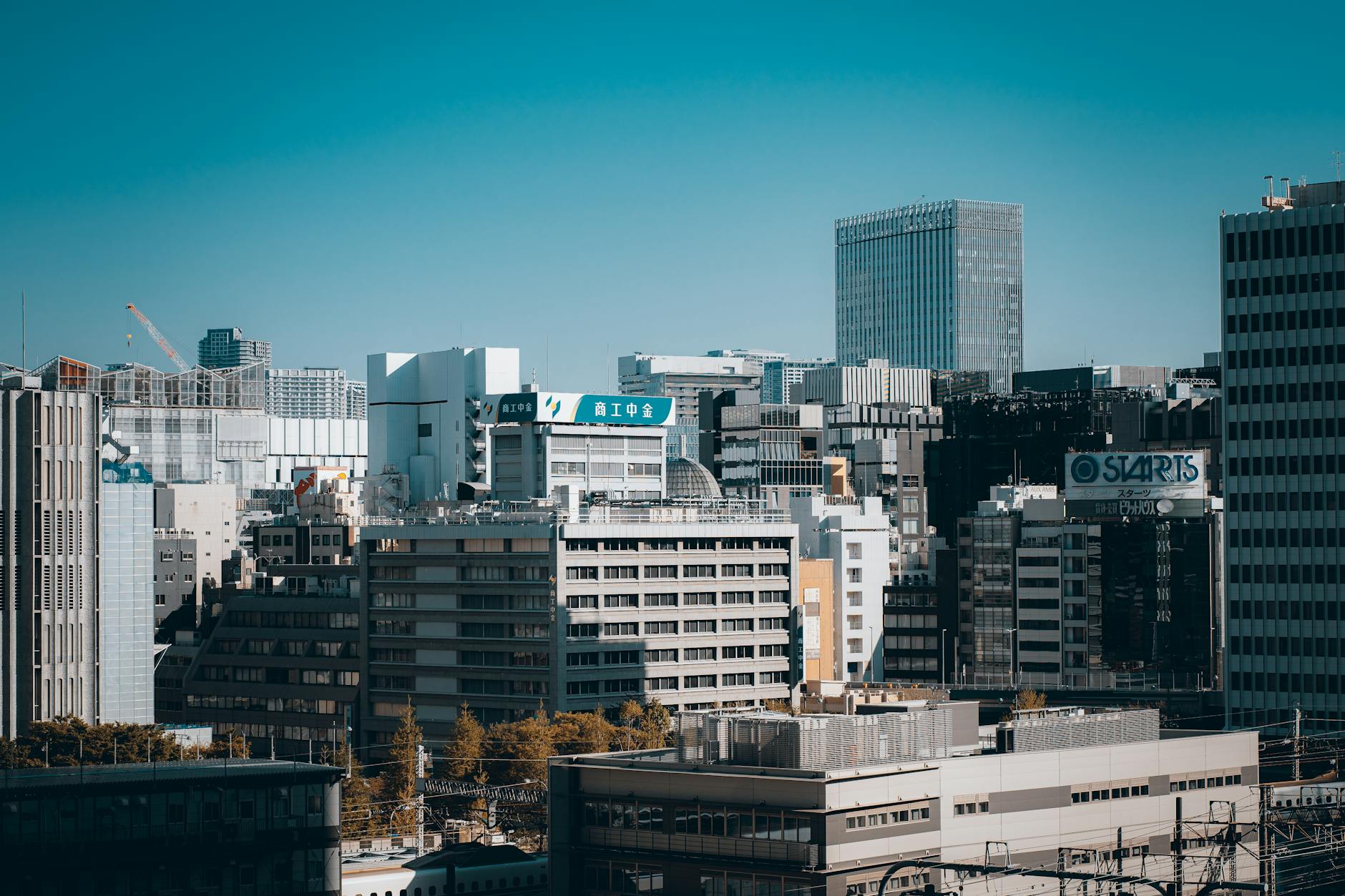
The week ending 24 May 2026 has been one of the noisier news weeks across East and Southeast Asia in recent months, with three storylines worth tracking by readers who want to understand the region beyond the headline-flash on regional financial channels. Here is the briefing for the long weekend.
Tokyo unveils its first AI-policy framework with binding industry obligations
On 21 May, Japan's Ministry of Economy, Trade and Industry (METI) issued the implementation guidelines for the AI Governance Bill that passed the Diet in late March. The substantive shift, which got modest international coverage, is the introduction of mandatory transparency reporting for any company deploying generative AI in customer-facing functions above a 100,000-user threshold. The first reports are due 31 March 2027.
What this means in practice: domestic AI startups in Japan now operate under a clearer regulatory floor than their counterparts in the EU (whose AI Act is enforced through penalties but lighter on positive reporting). Foreign companies operating in Japan — OpenAI, Anthropic, Google — must register their large-scale deployments with METI within 90 days. The penalty for non-compliance is a fine of up to 1 per cent of Japan-derived revenue.
The reaction from the Tokyo tech community has been measured rather than alarmed. The framework was developed with industry input over fourteen months and the reporting thresholds were negotiated upward from the original draft. For users in Korea, Taiwan, and Singapore — all jurisdictions watching Japan's approach — the precedent is significant.
Singapore's housing reset, 18 months in
The Singapore Housing Development Board (HDB) released its 18-month review of the May 2024 housing measures on 22 May. The measures — including a tightened cap on rented-out HDB flats, a higher additional buyer's stamp duty for second-time owners, and a recalibrated subsidy structure for first-time buyers — were aimed at slowing the resale price gradient.
The numbers in the report: resale prices in Q1 2026 were up 1.9 per cent year-on-year, compared with a 6.4 per cent rise over the equivalent period in 2023. New BTO application numbers stabilized. The waiting list shrunk modestly. By most internal Singapore metrics, the policy has worked as designed.
The unspoken implication: Singapore's housing market has moved to a "managed" footing more typical of the European social-housing model than of the financialized markets in Sydney, Auckland, Vancouver. Regional capitals — Bangkok, Kuala Lumpur, Manila — are watching with interest, though the specific mix of subsidy and restriction is hard to transplant.
The Philippines and the rising tension over the disputed maritime zone
The Philippines Coast Guard reported two new incidents at Second Thomas Shoal in the past week — water-cannon spraying by Chinese maritime militia at a Philippine supply vessel on 20 May, and the boarding-attempt incident on 22 May, both subsequently reported by AP and Reuters with confirming video.
The diplomatic response has been pointed but contained. Manila's foreign secretary issued a formal note of protest; ASEAN-level statement remained absent (member-state alignment on these issues is brittle); the US deepened consultations with the Philippines on the Mutual Defence Treaty's coverage of grey-zone harassment.
What this matters for regional travelers and business: the operational pattern in the South China Sea is not "escalation toward conflict" but "incremental change of fact on the water." Hong Kong shipping insurance rates rose marginally; Manila air-traffic remains unaffected; Singapore-flag commercial vessels report normal transit conditions.
Thailand's tourism quietly outpaces 2019 baseline
The Tourism Authority of Thailand released its 21 May briefing showing international arrivals in the first 142 days of 2026 at 14.7 million — slightly above the equivalent period of 2019, the pre-pandemic peak year. The driver is Indian, Russian and East Asian tourism rather than the Western European/North American base that anchored the 2019 numbers.
The implication for cost-conscious regional travelers: Phuket and Krabi peak-season pricing in November-December 2026 is forecast to track 8-14 per cent above 2025 prices. Bangkok hotel ADRs in the four-star segment are 22 per cent above pre-pandemic. The "cheap Thailand holiday" narrative familiar from the late 2010s is increasingly out of date.
Indonesia and the IKN capital relocation, three years in
The slow-motion saga of Indonesia's planned capital relocation to Nusantara (East Kalimantan) reached another inflection on 19 May with President Prabowo's announcement that the second tranche of ministry relocations originally scheduled for end-2026 would be deferred to mid-2027. Stated reason: budget reallocation toward the national meal program. Real reason, more likely: continued private-sector reluctance to relocate operations to a city that still functions partially.
The IKN project is at a familiar stage for mega-capital relocations (think Brasilia in the 1960s, Naypyidaw in the 2000s): infrastructure built, some government function in place, but the social and commercial ecosystem still anchored in the legacy capital. Jakarta retains 92 per cent of corporate headquarters of the JCI-listed companies. The 2027 deadline is increasingly viewed as the realistic milestone for whether the project becomes a working city or a monumental compound.
What to read this week
Tomohiro Inoue's analysis in Toyo Keizai (Japanese, paywalled but English summary on Nikkei Asia) on the METI guidelines is the most technically detailed in any language. Anggita Larasati at the CSIS Indonesia office published a 24-page report on the IKN logistics — in Bahasa Indonesia, with English executive summary. Channel NewsAsia's documentary on the HDB review aired Friday and is on YouTube for a fortnight.
The pattern across all five stories is the same one Asia has been showing all year: stable institutions, slow-moving policy, incremental on-the-ground shifts, very little drama at the macro level but considerable consequence for whoever happens to be on the receiving end of any given decision. For the next week — closing of the Tokyo legislative session on 30 May; the next BTO launch in Singapore in early June; another expected supply convoy at Second Thomas Shoal in the third week of June.