China Launches Tiangong Space Station Scientific Module
China's Mengtian-2 module successfully docked with the Tiangong space station, expanding its scientific capacity and hosting experiments from 14 partner nations.
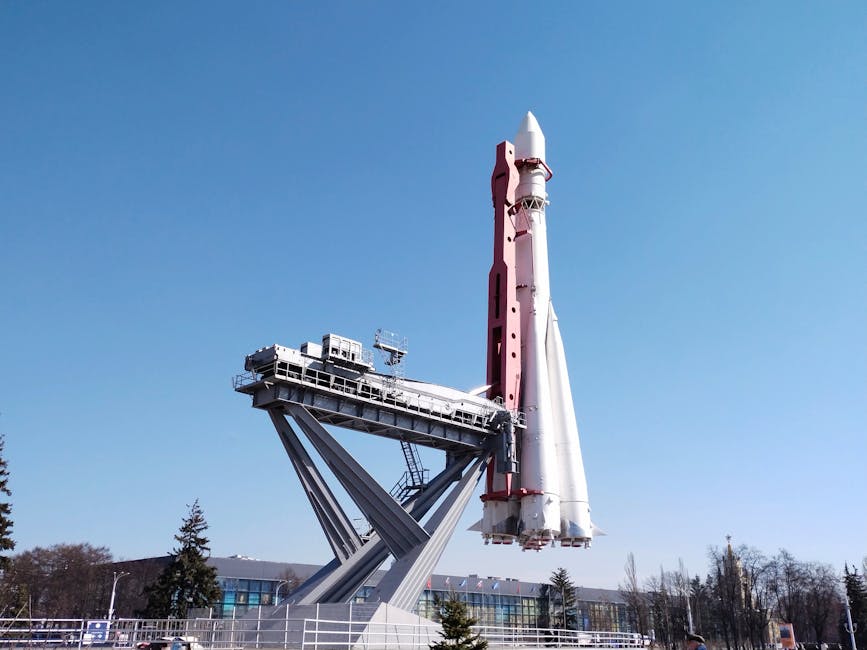
Mengtian-2 Module Expands Orbital Laboratory Capacity
China successfully launched the Mengtian-2 experimental module from the Wenchang Space Launch Site on October 31, 2025, using a Long March 5B rocket. The 23-ton module autonomously docked with the Tiangong space station approximately 13 hours after launch, expanding the station's pressurized volume by 40% and doubling its scientific experiment capacity.
The China Manned Space Agency confirmed the docking was nominal and that the three-person Shenzhou-22 crew began activating Mengtian-2's systems immediately. Commander Liu Yang reported "all indicators green" during a televised video link with ground control in Beijing.
Scientific Capabilities
Mengtian-2 carries 16 experiment racks focused on materials science, fluid physics, and biotechnology. The module includes a cold atom clock with an accuracy of one second per 30 billion years — exceeding the performance of similar instruments aboard the International Space Station — and a high-resolution Earth observation payload capable of 0.5-meter resolution imaging.
Zhang Rongqiao, chief designer of China's deep space exploration program, said the module would host experiments from 14 countries under bilateral cooperation agreements. "Tiangong is not a Chinese-only station. We have signed research agreements with the European Space Agency, the Pakistan Space Agency, and 12 other national programs," Zhang said.
Strategic Context
The expansion comes as the International Space Station approaches its planned decommission around 2030, positioning Tiangong as potentially the only continuously crewed orbital outpost. NASA, barred by the Wolf Amendment from bilateral cooperation with China in space, has expressed interest in multilateral frameworks that could enable limited engagement.
The module also carries China's first in-orbit manufacturing facility, designed to produce ultra-pure optical fibers in microgravity. A partnership with the Chinese Academy of Sciences aims to produce commercial quantities of space-manufactured fiber optics by 2028, targeting the telecommunications industry.
Upcoming Missions
The next crewed mission, Shenzhou-23, is scheduled for January 2026 and will carry the first non-Chinese astronaut to visit Tiangong — a European Space Agency mission specialist whose identity has not been publicly confirmed. China plans two additional cargo missions in early 2026 to supply the expanded station.
Total investment in the Tiangong program has reached an estimated 80 billion yuan ($11 billion), according to state media, though independent analysts place the figure closer to $20 billion when accounting for launch vehicle development costs.