India-Japan Bullet Train Project Completes First 100-Kilometer Section
India's first bullet train project completed 100 kilometers of civil works between Surat and Bilimora, with trial runs planned for late 2026 on the Japanese-funded corridor.
Mumbai-Ahmedabad High-Speed Rail Reaches Milestone
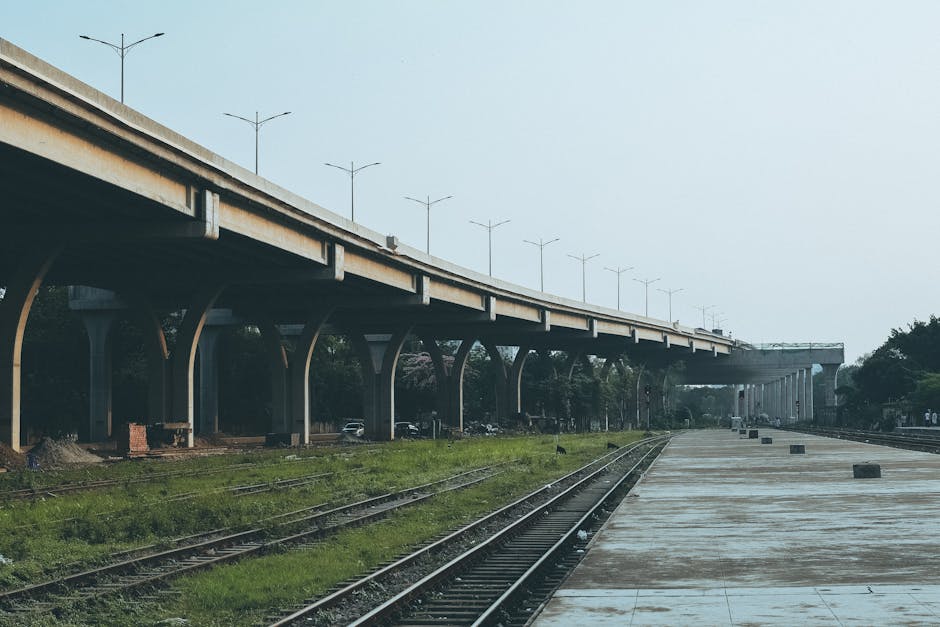
The National High Speed Rail Corporation Limited announced on October 28, 2025, that civil works on the first 100-kilometer section of the Mumbai-Ahmedabad bullet train were substantially complete. The section, running from Surat to Bilimora in Gujarat, includes 12 viaducts, three tunnels, and the foundations for two stations.
Japanese Ambassador to India Suzuki Hiroshi inspected the Surat depot facility, which will house Shinkansen E5-series rolling stock manufactured under license by a consortium of Kawasaki Heavy Industries and Larsen & Toubro. "This project represents the deepest industrial partnership between Japan and India," Suzuki said.
Technical Specifications
The 508-kilometer corridor will operate trains at a maximum speed of 320 kilometers per hour, reducing the Mumbai-Ahmedabad journey from eight hours by road to approximately two hours. The line includes a 21-kilometer undersea tunnel beneath the Thane Creek near Mumbai, being bored by a Japanese-made tunnel boring machine named "Mavala."
The rail gauge uses Japan's 1,435-millimeter standard gauge with dedicated elevated tracks — a first for India, which operates on broad gauge for conventional rail. The project employs earthquake early warning systems derived from Japan's Shinkansen technology.
Cost and Timeline
Total project cost has risen to $19.8 billion from the original $14.7 billion estimate in 2017, driven by land acquisition delays and COVID-era disruptions. The Japan International Cooperation Agency is financing 81% of the cost through a 50-year soft loan at 0.1% interest — the most concessional terms JICA has ever offered.
Railway Minister Ashwini Vaishnaw said the Surat-Bilimora section would begin trial runs by December 2026, with full commercial operations on the entire corridor expected by March 2029. "We are 18 months behind the revised schedule but the engineering quality is impeccable," Vaishnaw said at a progress review meeting.
Economic Projections
The Gujarat Industrial Development Corporation estimated the bullet train would catalyze $12 billion in new industrial investment along the corridor, particularly in the Surat-Vadodara manufacturing belt. Property values within 5 kilometers of planned stations have already risen 40-60% since 2020, according to real estate consultancy Knight Frank India.
The project has created 24,000 direct construction jobs and trained 4,000 Indian engineers in Shinkansen technology at facilities in Japan and India, forming a talent pool for future high-speed rail projects under consideration for the Delhi-Varanasi and Chennai-Bengaluru corridors.