Petronas Partners With Japan's JOGMEC on $2.7 Billion Project
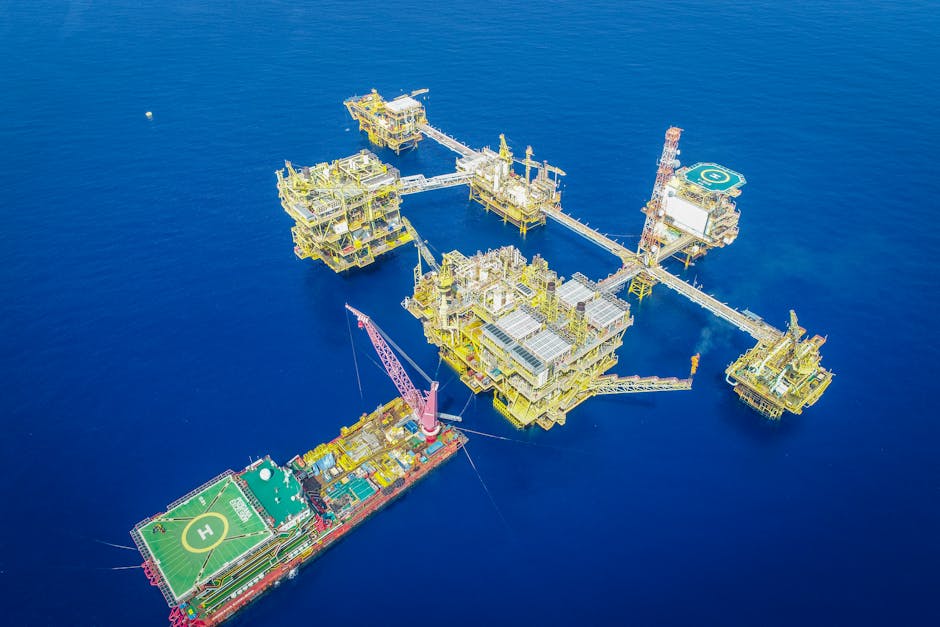
Malaysia's state oil company Petronas inaugurated Southeast Asia's first commercial-scale carbon capture and storage facility on December 28, 2025, at the Kasawari gas field off the coast of Sarawak. The $2.7 billion project, developed in partnership with Japan Oil, Gas and Metals National Corporation, is designed to capture 3.3 million metric tons of carbon dioxide annually from natural gas processing operations.
Prime Minister Anwar Ibrahim attended the offshore inauguration via satellite link, calling the facility "proof that Malaysia can lead the energy transition while remaining a competitive hydrocarbon producer." The captured CO2 is injected into depleted geological formations beneath the seabed at depths exceeding 2,000 meters.
Technical Specifications
The Kasawari CCS facility processes gas from the Kasawari field, which contains 40% CO2 — among the highest concentrations in any producing gas field globally. Without carbon capture, the field's development would have been economically and environmentally unviable. The separation technology, supplied by Honeywell UOP, strips CO2 from the raw gas stream before it enters the liquefaction process.
Petronas Vice President of Upstream Adif Zulkifli said the facility would prevent the equivalent of removing 720,000 cars from the road annually. "This is not a pilot project. This is industrial-scale decarbonization integrated into our core operations," Adif said.
Regional CCS Hub
Petronas has proposed developing Sarawak as a regional CCS hub, offering geological storage services to neighboring countries and international emitters. The company signed memoranda of understanding with Japanese utilities JERA and Tokyo Gas to study cross-border CO2 transport from Japanese industrial facilities to Malaysian storage sites.
The International Energy Agency's Southeast Asia Energy Outlook identified CCS as "essential for the region's net-zero pathway," estimating that ASEAN nations need to capture 120 million tons of CO2 annually by 2050. Current capacity across all of Asia stands at approximately 10 million tons.
Financing and Policy
JOGMEC provided $800 million in financing backed by Japanese government guarantees, reflecting Tokyo's strategy of supporting overseas CCS projects to meet Japan's own emissions reduction commitments. The Asian Development Bank contributed a $400 million green bond, its first for a CCS project.
Malaysia's Petroleum Development Act was amended in October 2025 to create a regulatory framework for CO2 storage, including liability provisions for long-term storage integrity. Environmental groups including the Center for Environment, Technology and Development Malaysia called for independent monitoring of subsea storage sites, citing risks of CO2 leakage in seismically active regions.