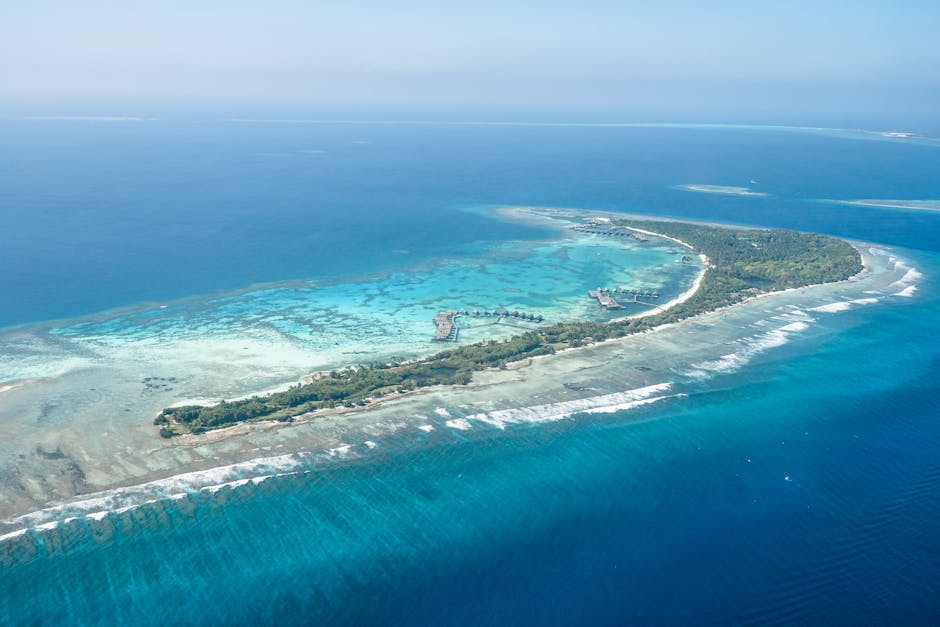
UN Climate Report Projects 80% of Islands Uninhabitable by 2100
A United Nations Environment Programme report released on March 26, 2026, projects that 80% of the Maldives' 1,192 islands could become uninhabitable by the end of the century under current emissions trajectories. Sea levels around the Indian Ocean archipelago have risen 3.5 millimeters annually over the past decade — 40% above the global average — with tidal flooding events increasing from 12 per year in 2010 to 47 in 2025.
The report, titled "Sinking Nations: Climate Futures for Small Island Developing States," was presented at the Maldives Climate Vulnerability Conference in Male attended by representatives of 42 nations and 15 international organizations.
Current Impact
Maldivian President Mohamed Muizzu said 14 islands had been abandoned in the past five years due to coastal erosion and aquifer contamination by saltwater intrusion. On the capital island Male, home to 250,000 people, groundwater salinity levels have reached 4,500 parts per million — nine times the WHO drinking water standard — forcing complete dependence on desalination.
Tourism, which accounts for 28% of GDP and 60% of foreign exchange earnings, faces growing risks. The Maldives Tourism Council reported that 23 resort islands experienced significant beach erosion in 2025, with remediation costs exceeding $120 million. Sea surface temperature increases have caused three consecutive years of coral bleaching on major reef systems, degrading the underwater environment that attracts 1.9 million visitors annually.
Adaptation Strategy
The Maldives government is pursuing a $5 billion adaptation strategy with three pillars: land reclamation and elevation of critical infrastructure, development of the Hulhumale artificial island city as a climate-resilient population hub, and exploration of a "floating city" prototype developed with Dutch engineering firm Waterstudio.
Hulhumale Phase 2, elevated to 2 meters above sea level compared to the natural 1.5 meters of most Maldivian islands, now houses 80,000 residents and is designed for an eventual population of 240,000. The $1.2 billion project, financed by the Asian Development Bank and bilateral donors, is the most ambitious climate adaptation infrastructure in any small island developing state.
International Dimensions
At the conference, small island states renewed their call for a dedicated loss and damage fund of $100 billion annually, noting that the $700 million pledged at COP28 "covers a fraction of the actual costs." The Alliance of Small Island States proposed an international tribunal mechanism to hold major emitters legally accountable for climate-related losses.
The Maldives has also begun preliminary discussions with Australia and India about potential future relocation agreements for its 521,000 citizens, though officials stressed that relocation is "an absolute last resort, not a plan."