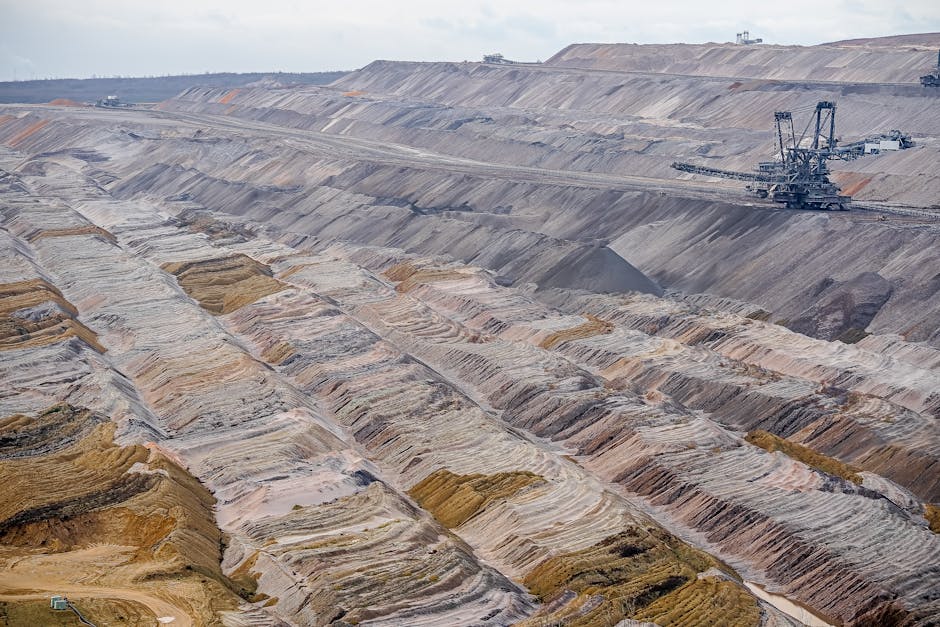
Underground Expansion Doubles Output at World's Third-Largest Copper Mine
Rio Tinto's Oyu Tolgoi copper-gold mine in southern Mongolia reached full underground production capacity on January 18, 2026, following completion of the $7.06 billion underground expansion. The mine is now producing 500,000 metric tons of copper concentrate annually, making it the world's third-largest copper mine and transforming Mongolia's fiscal outlook.
The underground operation, delayed by five years and $2.4 billion in cost overruns since the original 2016 target, uses block caving — a method that allows extraction of massive ore bodies by undermining them and letting gravity do the work. The underground ore grade of 1.52% copper is nearly three times higher than the open-pit operation.
Economic Impact
The Mongolian Ministry of Finance projected that Oyu Tolgoi would contribute 30% of GDP and 40% of government revenue at full production, up from 18% and 22% respectively in 2024. Copper exports are expected to generate $6 billion annually at current prices, nearly doubling Mongolia's total export revenue.
Finance Minister Bold Javkhlan said the revenue windfall would fund a sovereign wealth fund capitalized at $2 billion by 2030, infrastructure investment in the capital Ulaanbaatar, and a universal child benefit increase from 100,000 to 150,000 tugrik ($44) per month.
Resource Dependency Risks
Economists cautioned against over-reliance on a single commodity. The World Bank's Mongolia Country Manager, Andrei Mikhnev, warned of "Dutch disease" effects, where resource revenues strengthen the currency and make non-mining sectors uncompetitive. The Mongolian tugrik appreciated 8% against the dollar in the second half of 2025 as copper revenue expectations grew.
Dale Choi, an independent Mongolia analyst, noted that "Oyu Tolgoi gives Mongolia leverage it has never had, but also creates a vulnerability. A 20% drop in copper prices would blow a 12% hole in the national budget."
Governance and Community Issues
The mine's community relations remain contentious. Herders in Khanbogd soum, the district surrounding the mine, have reported declining water tables and pasture degradation. The Oyu Tolgoi Independent Environmental Compliance Review, published in October 2025, found that the mine's water extraction was within permitted limits but recommended enhanced monitoring of aquifer levels.
Mongolia holds a 34% stake in Oyu Tolgoi through state-owned Erdenes Oyu Tolgoi, with Rio Tinto subsidiary Turquoise Hill Resources controlling 66%. Negotiations to increase Mongolia's stake to 50% are ongoing, with Prime Minister Oyun-Erdene Luvsannamsrai describing equity redistribution as "a matter of national sovereignty over strategic resources."