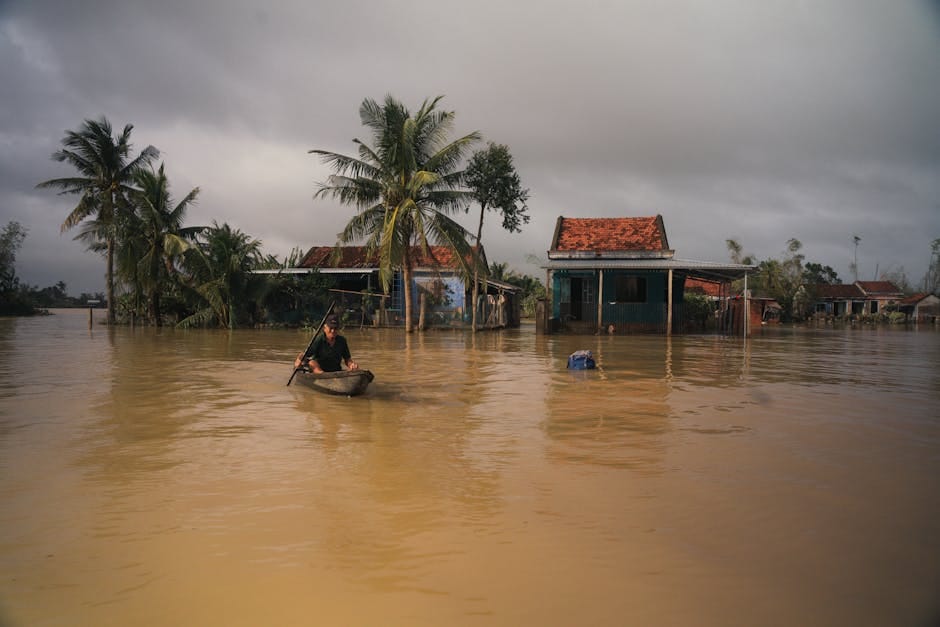
Worst Flooding in Decade Strikes Nakhon Si Thammarat and Surat Thani
Severe flooding across four provinces in southern Thailand displaced more than 500,000 people in the first week of January 2026, after prolonged monsoon rainfall dumped over 600 millimeters in 72 hours on the Malay Peninsula coast. The Thai Meteorological Department described the rainfall as a once-in-50-year event, exacerbated by runoff from deforested hillsides in the Khao Luang mountain range.
Nakhon Si Thammarat bore the brunt, with floodwaters reaching 3 meters in the provincial capital and inundating 80% of the urban area. Surat Thani, Phatthalung, and Songkhla provinces were also severely affected. The Department of Disaster Prevention and Mitigation confirmed 18 deaths and 45 injuries as of January 9.
Rescue and Relief
The Royal Thai Army deployed 12,000 soldiers and 180 boats for rescue operations, evacuating residents from rooftops and upper floors in submerged neighborhoods. The Royal Thai Navy positioned two helicopter carriers offshore to support airlift operations in areas inaccessible by road.
Prime Minister Paetongtarn Shinawatra visited Nakhon Si Thammarat on January 8 and authorized emergency relief disbursements of 15 billion baht ($430 million). "Climate change is making these events more frequent and more severe. We must invest in flood resilience, not just recovery," she said.
Agricultural and Economic Losses
The Office of Agricultural Economics estimated 450,000 rai (72,000 hectares) of rubber plantations submerged, threatening 5% of Thailand's annual rubber production. Palm oil plantations in Surat Thani suffered extensive damage, with the Thai Palm Oil Association projecting a 12% production decline in the first quarter of 2026.
Tourism in Koh Samui and Koh Phangan was disrupted as ferry services were suspended for four days. The Tourism Authority of Thailand estimated cancellation losses of 3.5 billion baht during what is typically peak season for the southern islands.
Climate and Infrastructure Factors
Researchers at Chulalongkorn University's Environmental Research Institute attributed the flooding severity to three converging factors: above-average sea surface temperatures in the Gulf of Thailand feeding moisture into the monsoon system, inadequate drainage infrastructure in rapidly urbanizing towns, and 18% reduction in forest cover in the Khao Luang watershed over the past two decades.
The World Bank's Thailand Country Director, Fabrizio Zarcone, offered technical assistance for flood resilience planning and noted that Thailand sustains an average of $2.8 billion in annual flood losses, ranking it among the top 10 most flood-affected countries globally.